

Tonight, the sky puts on its biggest show of the year. The Perseid meteor shower — the one astronomers circle on their calendars — reaches its peak, and under decent conditions you can catch dozens of meteors an hour. No equipment required. No experience required. Just a blanket, a dark spot, and a little patience.
The 5-rule Perseid playbook
- Go late. The show gets better after midnight, when your side of Earth turns into the meteor stream.
- Get dark. Even a 20-minute drive away from city glow multiplies what you'll see.
- Look northeast-ish — toward the constellation Perseus — but honestly, meteors streak everywhere. Lie back and take in as much sky as possible.
- Ditch the phone. Your eyes need 20–30 minutes to fully dark-adapt, and one screen glance resets the clock.
- Bring the kids. A meteor shower is the rare event that out-competes a tablet. Blankets, snacks, wishes — the whole ritual.
Meteors tonight. Everything else all year.
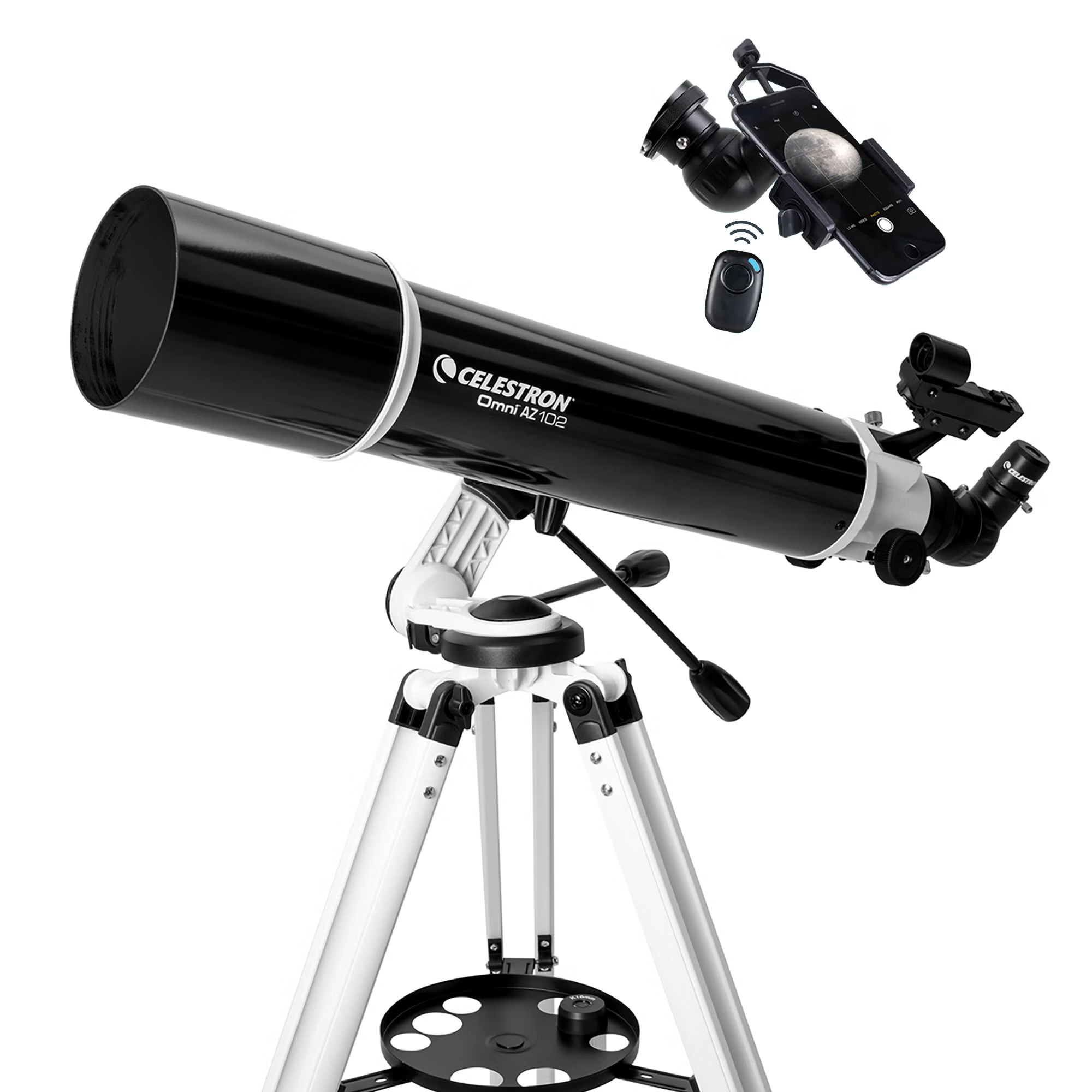
Here's what happens after a great meteor night: somebody in the family asks, "okay, but can we see Saturn?" That's where a real telescope changes everything. The Celestron Omni AZ 102 — new in our store — is the ideal first serious scope: a 102mm refractor with buttery-smooth pointing, simple enough for kids to aim, powerful enough for Saturn's rings, Jupiter's moons, and lunar craters that look close enough to touch.
Even better: it comes with a smartphone adapter and Bluetooth remote, so the moon shot you brag about in the group chat comes from your own driveway. First telescope photos of the moon are a genuine family milestone — ask anyone who's taken one.
Screen time vs. sky time
The best technology doesn't isolate people — it gives them something to gather around. A telescope on a warm August night does exactly that: three generations taking turns at the eyepiece, arguing about whether that dot is a planet or a plane. That's a quality-of-life upgrade no streaming service ships.
Share:
The $200 Machine That Fixes Things Around Your House
Make It Yours: The Real Advantages of Personalized Products