

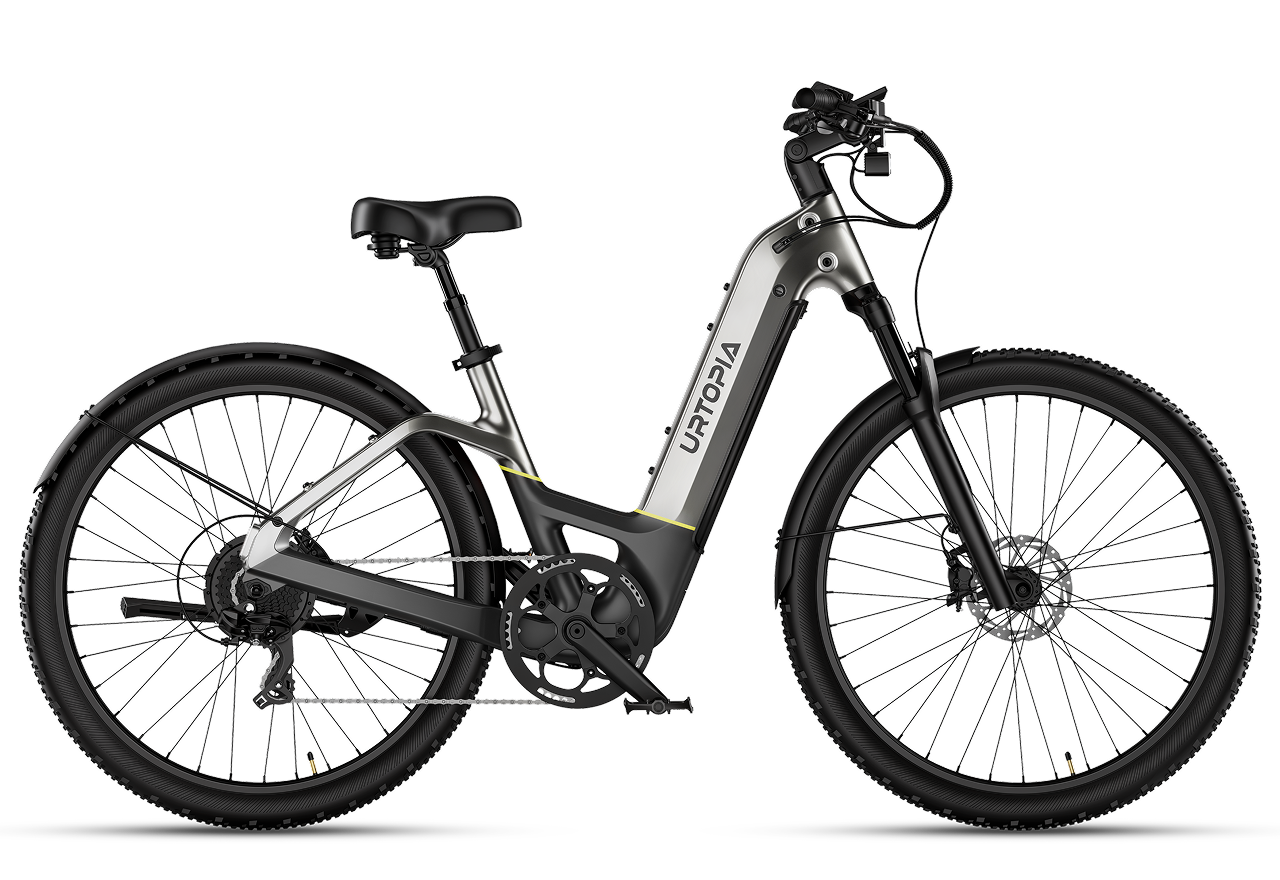
There is one trip a car handles badly, and most of us make it twice a day. Under six miles, mostly stop-and-go, ending in a parking search. The engine never fully warms up, the fuel economy is at its worst, and you arrive slightly more tense than when you left.
Fall is the season to fix it. The heat has broken, the light is still good at 6pm for a few more weeks, and the roads are quieter than they will be in December. If you have been circling the idea of an e-bike, this is the window.
The short-trip math nobody runs
Take a five-mile commute. In traffic, that is usually 18 to 25 minutes door to door once you count parking. On an e-bike with pedal assist, the same five miles runs about 20 minutes at a relaxed 15 mph — and it ends at the door, not three levels underground.
So the time is close to a wash. What changes is everything around the time:
- You get 40 minutes of light daily movement without scheduling it
- You stop paying for parking, and you stop hunting for it
- Your car's worst mileage trip disappears from the week
- You arrive alert instead of wound up
That last one is the part people underestimate. Commuting by car is passive stress — you're responsible for a lot, and you control almost none of it. Commuting under your own power, even assisted power, flips that.
Why carbon matters more than the spec sheet suggests
Most e-bikes weigh 55 to 70 pounds. That number seems abstract until the first time you have to carry one up a porch step, lift it onto a rack, or push it the last block after the battery runs low.
Carbon fiber frames cut that meaningfully. The Urtopia Carbon Atom and the Carbon Classic land far closer to a normal bike than a normal e-bike, and the difference shows up in the decisions you make. A bike you can lift is a bike you bring inside, store in an apartment, and take on the car rack for a weekend. A bike you cannot lift is a bike that lives in the garage and slowly stops being ridden.
Carbon also rides differently. It damps road buzz in a way aluminum does not, which matters on a route with rough pavement and matters more when you are riding it every single day rather than twice a month.
Picking a frame you will actually use
The model that fits your life beats the model with the best numbers. Four honest categories:
You live in an apartment or take the train partway
Get a folder. The Carbon Fold 2 collapses small enough for a closet, an elevator, or a trunk, and the Carbon Fold Step-Thru adds an easier mount if you are riding in work clothes.
You want to step through, not swing a leg over
Step-thru frames get dismissed as a comfort option. They are really an outfit option — they are what makes riding in a skirt, a suit, or after a long day feel unremarkable. The Carbon Classic Step-Thru and Carbon 1 Step-Thru both cover it.
Your route has real hills
This is where the assist earns its keep. The Carbon Fusion Pro and Carbon Fusion GT have the torque to turn a climb you would avoid into a climb you stop noticing. If a hill is the reason you have not committed, this is the answer to it.
You want the simplest possible ride
The Carbon Joy and Carbon Joy Ultra are the get-on-and-go picks — upright, uncomplicated, and available in a low-handlebar setup if you prefer a more forward position.
The fall-specific part
Riding September through November is genuinely the best cycling of the year, but it has three rules.
Light early. Sunset moves fast after Labor Day. By mid-October a 5:30pm ride home is a dusk ride home. Run your lights on the way out too, not just the way back — daytime running lights are the single cheapest visibility upgrade there is.
Dress for mile three. The classic mistake is dressing for how it feels in the driveway. You will warm up within ten minutes, and with pedal assist you warm up without soaking through. A light shell you can stuff in a bag beats a heavy jacket you will be carrying.
Watch the leaves. Wet leaves on a painted line are the most underrated hazard in cycling. Brake earlier than feels necessary, and take corners a gear lower than you would in August.
Start with two days
The mistake people make is going all in — selling the second car, committing to five days a week, then quitting in week three when it rains.
Pick two days. Ideally the two where your schedule is most predictable and you are least likely to need the car mid-day. Ride those two consistently for a month. Almost everyone ends up adding a third without deciding to, because the ride stops feeling like a plan and starts feeling like the default.
Browse the full lineup and accessories in our eBikes & Accessories collection — and if you are stuck between two frames, email us at sales@allgadgetworld.com with your route and we will tell you which one we would ride.

Share:
Is the Air in Your Home Actually Healthy? Here's How to Know
DJI Avata 360: The Drone That Films Everything, Then Lets You Choose