

There is a moment that turns people into 3D printing converts, and it is almost never the one they expect. It is not printing a dragon or a chess set. It is the morning the dishwasher rack clip snaps, and instead of hunting a discontinued part or replacing the whole rack for $180, you print a new clip before breakfast.
That is the quiet promise of a printer on your desk: the things in your home stop being disposable.
The stuff people actually print
Ask anyone who owns one what they have made in the last month and you will hear the same kinds of answers:
- The clip, knob, or bracket that broke on an appliance nobody stocks parts for any more
- Drawer organizers cut to the exact millimetre of an awkward space
- Wall mounts for the router, the controller, the thing with no proper home
- Replacement feet for furniture that has been wobbling for two years
- The garden hose adapter the hardware store does not carry
None of it is glamorous. All of it saves a trip, a purchase, or a landfill entry.
Where to start, honestly
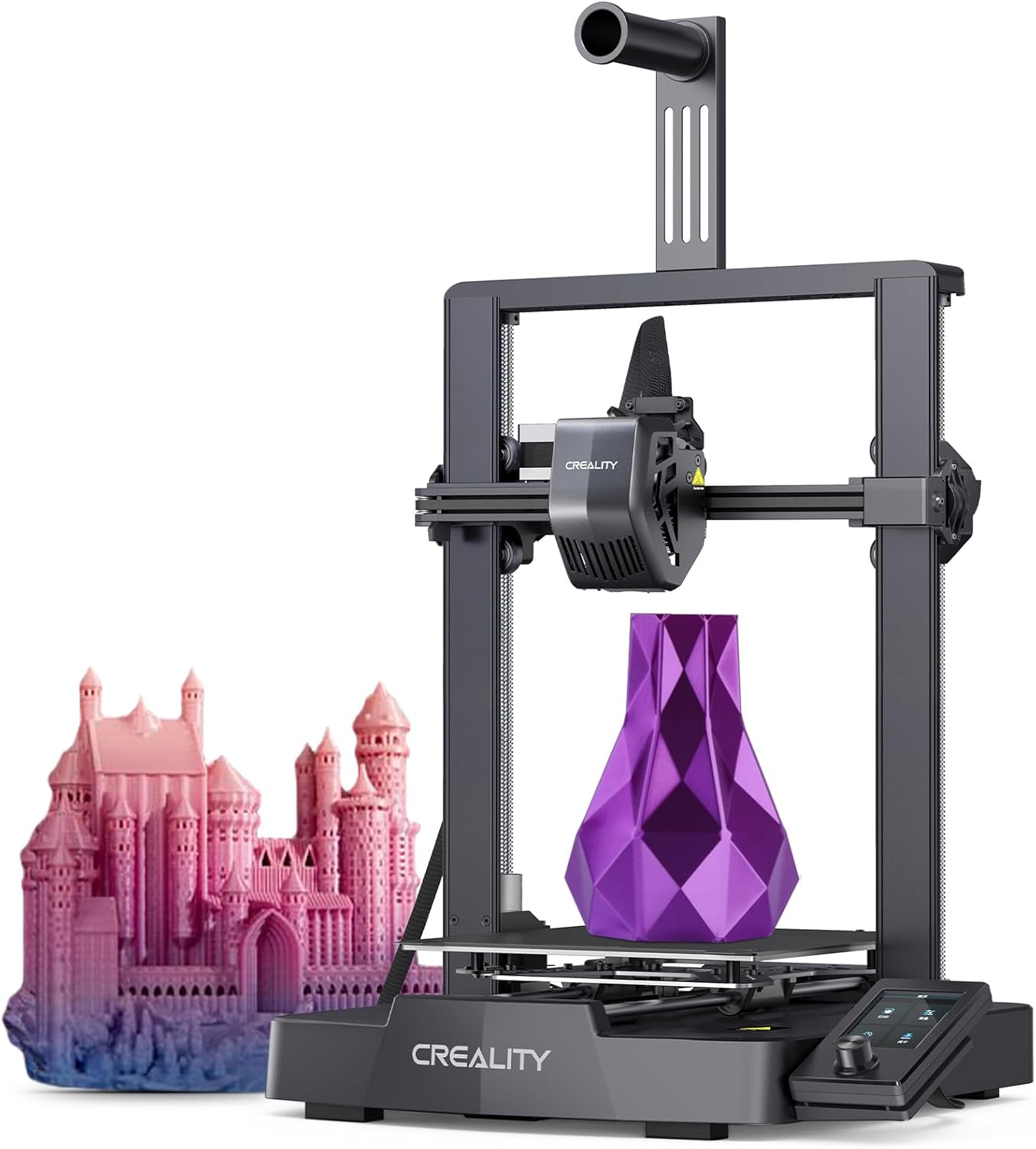
If you just want to try it: the Creality Ender 3 V3 SE is the machine we point most first-timers at. Around $199, auto-levelling, and it prints at 250mm/s so you are not waiting overnight to find out whether it worked. It is the cheapest way to discover whether this becomes a habit or a shelf ornament.
If you already know you will use it: the Creality HI runs at 500mm/s with an all-metal frame and a 260x260x300mm build volume - big enough for real household parts, fast enough that a bracket takes a coffee break rather than an afternoon.
If you want colour and no fiddling: the K2 Pro paired with the Creality CFS handles multi-colour prints automatically and keeps filament dry between jobs.
If you care about fine detail: resin is a different craft. The HALOT-X1 16K resin printer resolves detail that filament simply cannot - miniatures, jewellery masters, tiny mechanical parts.
The part nobody tells beginners
Two things separate people who love their printer from people who abandon it, and neither is the printer.
Keep filament dry. PLA absorbs moisture from the air, and damp filament prints badly - stringing, weak layers, rough surfaces. Most people blame the machine. A Space Pi filament dryer solves a problem you would otherwise spend weeks misdiagnosing.
Do not run out mid-print. Nothing kills momentum like a failed job at hour six. An Everyday 6KG filament bundle works out around $18 a kilogram and means the printer stays useful instead of idle.
Skip the modelling entirely
Here is the honest barrier: most people do not want to learn CAD to replace a bracket. You should not have to.
A 3D scanner turns the broken part itself into the model. Point, capture, print. The CR-Scan Ferret Pro is the accessible end of this - good enough for household objects and hobby work. For engineering-grade tolerances, the Raptor Pro scans to 0.02mm, which is the difference between a part that fits and a part that nearly fits.
Worth it?
A $199 printer pays for itself somewhere around the fourth or fifth thing you would otherwise have replaced. After that it is just there - quietly making your house a place where broken things get fixed instead of thrown out.


Share:
Turn Your Backyard Into a Movie Theater This Summer
The Perseids Peak Tonight — Here's How to Actually See Them